James Stockdale, best known as a 1992 independent candidate for vice president of the US, was a highly decorated veteran and former prisoner of war.
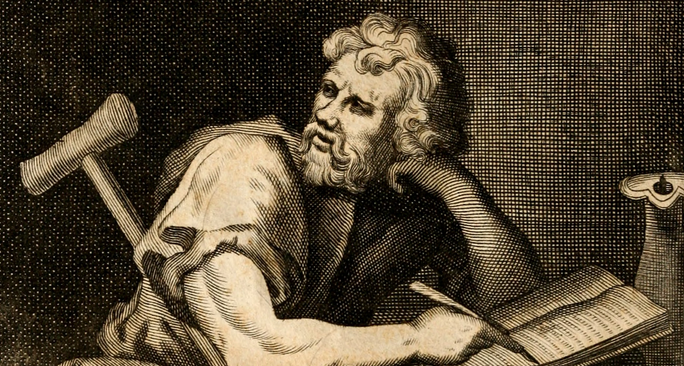
In 1960 a Stanford philosophy professor, a military veteran himself, gave Stockdale a copy of Enchiridion, a manual for the combat officer written in AD 50 by the Greek Stoic philosopher Epictetus, saying “I think you might find this useful.”
Through the years Stockton studied Enchiridion and tried to practice the many messages about discipline, self-control, endurance and perseverance, virtue and moral character.
However, Stockdale did not fully appreciate its value until September 9, 1965, when his plane was shot down over Vietnam.
He recalls, “When I ejected from that airplane in 1965, I left my world of technology and entered into the world of Epictetus.
I was alone and crippled; self-reliance was the basis for daily life.
The system of values I carried with me into this realm was to be tested by my captors.
The payoff was my self-respect. I would keep it or it would be torn from me and used as leverage against my senses of purpose and stability.”
“Epictetus” helped Stockdael develop a set of rules that supplemented the military code of conduct in addressing the torture and other realities he faced daily.
He expected the prisoners under his command to resist to the best of their physical and moral capacity, to endure torture before divulging information, to tell their fellow prisoners how they had been tortured and what information they had revealed, and to make their torturers “begin all over again the next day.”
Stockdale’s story is one of resiliency and courage.
Most of us, thankfully, will never face literal prison or torture. But we may feel imprisoned in a situation, or tortured by circumstances—and as a resilient leader with a backbone, we will live and lead by our convictions.
Resiliency requires courage.
Morality requires strength.
Living from one’s deepest values takes tenacity.
How we handle our fear will be the factor that either makes us or breaks us. This is how resilent leaders find their inner power:
They embody courage. Resilient leaders view difficulties as a challenge, not as a paralyzing event. They look at their failures and mistakes as lessons to be learned from and opportunities for growth.
They express their core convictions. Resilient leaders develop a set of core beliefs that very few things can shatter. An inner moral compass is especially helpful when hard decisions are afoot, but is a trusted guide every day.
They acquire wisdom. Resilient leaders don’t wallow or dwell on failures and fear; they acknowledge the situation, understand their fear and learn from their mistakes.
They commit to their confidence. Resilient leaders are committed to their lives and confident in their goals, and they have a compelling reason to lead. Commitment isn’t just restricted to their work—they commit to everything in their lives.
Resilience is the endurance of the heart when the soul feels like it is breaking.
Lead From Within: Resilience serves as the backbone for all our great virtues. Without fear there is no courage, without values there are no convictions, without resiliency there is no strength. When should we start training for resiliency? Right now.
N A T I O N A L B E S T S E L L E R
The Leadership Gap: What Gets Between You and Your Greatness
After decades of coaching powerful executives around the world, Lolly Daskal has observed that leaders rise to their positions relying on a specific set of values and traits. But in time, every executive reaches a point when their performance suffers and failure persists. Very few understand why or how to prevent it.
Additional Reading you might enjoy:
- 12 Successful Leadership Principles That Never Grow Old
- A Leadership Manifesto: A Guide To Greatness
- How to Succeed as A New Leader
- 12 of The Most Common Lies Leaders Tell Themselves
- 4 Proven Reasons Why Intuitive Leaders Make Great Leaders
- The One Quality Every Leader Needs To Succeed
- The Deception Trap of Leadership
Photo Credit: Getty Images
Of Lolly’s many awards and accolades, Lolly was designated a Top-50 Leadership and Management Expert by Inc. magazine. Huffington Post honored Lolly with the title of The Most Inspiring Woman in the World. Her writing has appeared in HBR, Inc.com, Fast Company (Ask The Expert), Huffington Post, and Psychology Today, and others. Her newest book, The Leadership Gap: What Gets Between You and Your Greatness has become a national bestseller.
Alli Polin
11. Mar, 2014
Thanks for sharing James Stockdale’s story of resilience and survival.
What makes some people find a well of tenacity to call on when others fall down, broken? My heart tells me that hope is mixed in with the courage and as long as even a possibility of hope remains, people will call on reserves that for others were emptied long ago.
Lots to reflect on here. Thanks, Lolly!
~ Alli
Robert Hartzell
11. Mar, 2014
Great story.
Having core values and willing to defend them are marks of a true leader. It’s so true that how we handle fear will make or break us. Good post. Thanks Lolly.
Robert
lollydaskal
11. Mar, 2014
Alli
You make a great point about hope, and for me,I believe what gives people resiliency is meaning.
When we find meaning in our suffering we envelop courage.
Thanks for sharing. I appreciate you.
Lolly
Stephen Houston
11. Mar, 2014
Consistent, communication (inside “self-talk” or outside “others”), conveys, clarity, certainty, confidence and conviction…with conviction all obstacles dissolve. Powerful insights, Lolly!
Stephen
LaRae Quy
11. Mar, 2014
James Stockdale’s story is a remarkable one…you bring out such important aspects, and one of my favorite is this: “Moral compass and core convictions. Resilient leaders develop a set of core beliefs that very few things can shatter.”
Core convictions give us the mental strength we need to truly move beyond our circumstances when we hit tough times.
Great post!
Terri Klass
12. Mar, 2014
The story about James Stockdale is truly profound. When one is facing such grave physical and mental challenges, it is difficult to see how they survive.
But as you share so beautifully, resilience can empower the human condition in a magnificent way. I especially loved the point about not allowing ourselves to become paralyzed by drawing on lessons we learned along the way. I wonder how many of us can do this automatically as a survival tactic to any challenge we face.
Food for thought.
Great post, Lolly!
Garren Fagaragan
12. Mar, 2014
James Stockdale, Victor Frankl, and Nelson Mandela
show us the power of a COMPELLING VISION.
A vision that draws one forward.
A vision that despite external circumstances…
employs the qualities of a resilient leader.
Thanks Lolly for another insightful post!!
lollydaskal
13. Mar, 2014
Garren
You are so right and beautifully stated: A vision that despite external circumstances…
employs the qualities of a resilient leader.
Thank You for sharing.
We miss you at #leadfromwithin!
Tim Boone
13. Mar, 2014
It has something to do with the degree to which people believe the matter. That what they do really counts. That’s why having buddies who you don’t want to let down makes so much more difference in combat and for POW s than mission or patriotism. I think there are implications for the corporate world there………
Ruth Schwartz
13. Mar, 2014
Thanks Lolly,
The think about great stories is that many people are inspired by them but don’t think that their own story is a compelling or important. But I find that each person can talk their core values but sometimes it takes others to hear what they are speaking. It is important for all of us to acknowledge the values of others. In that way we find the hero and the leader inside of us all.
Pandu Ranga Reddy.D
03. Feb, 2017
Wonderful words on Resilience.. to me it feels like, very tough to live by.. In-spite of repeated failures ( unfavorable outcomes ) to stand up one more time is the Hall mark of a Resilient Human being.
We all have been given some thing Unique Mind, unless we train it the way we want it ( Ideally in accordance with the Natural laws ) it leads us to a chaos, havoc in our lives.
We must never ,never, never ever give up on this Training the Mind in accordance with our Inner voice. We know it for sure what is right ,which will bring harmony,balance , Coherence of the space we live in. It Just that the old un trained mind refuse to fall in line.
We must tread this path very carefully with out going to extreme steps , just the right balance is what we need to achieve. In between suppression & Expression , we have a beautiful moments of life.